The Ultimate Guide to Flying In-Cabin With Your Dog
What actually determines whether your dog can fly in the cabin with you — carrier sizing, airline-by-airline rules, and the realistic timeline to get it all sorted before you book.
Can Your Dog Actually Fly In-Cabin?
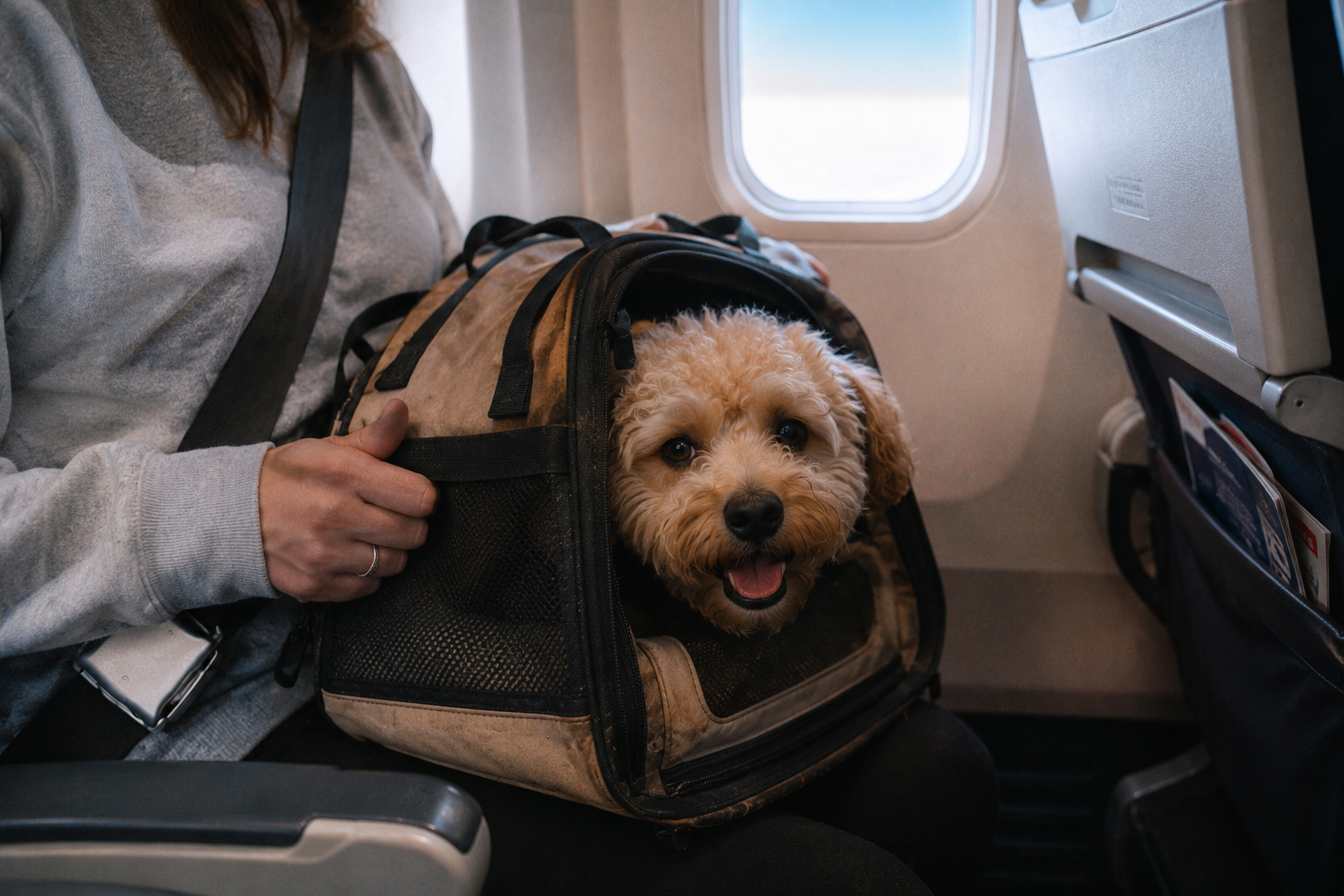
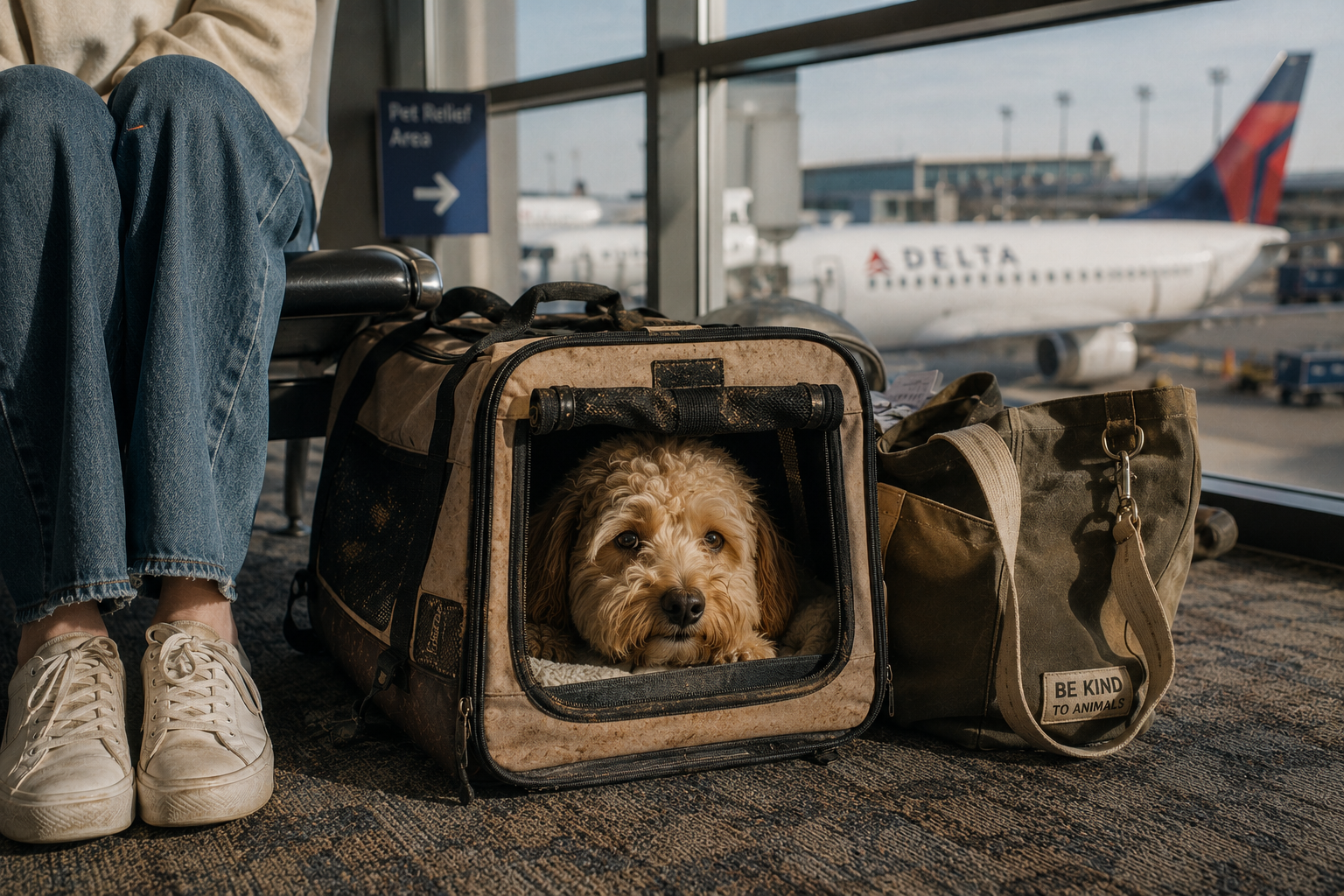
Most major US airlines allow small dogs to fly in the cabin, but "small" is doing a lot of work in that sentence. What actually matters is the combined weight of your dog and the carrier, and whether that carrier fits fully under the seat in front of you — not a general size class or breed.
That's also why the same dog can be cleared for one airline and turned away at the gate for another. The rule isn't really about your dog — it's about whether the carrier disappears under the seat in front of you.
What Airlines Actually Check
Combined weight of your dog and the carrier — most airlines cap it around 20 lb, all-in
Carrier dimensions that fit under YOUR specific seat — these vary by aircraft, not just airline
One pet carrier counts as your personal item — you won't also get a bag under the seat
A cap on total pets allowed in-cabin per flight — book early on popular routes
The Realistic Booking Timeline
Most airlines only guarantee a small number of in-cabin pet spots per flight, and they fill up independently of the human seats. If you already have your dates, the smartest move is calling to add your dog to the reservation the same day — not after you've committed to specific seats.
The single biggest mistake we see: booking the flight before confirming the airline's live pet policy for that specific route.
Documents to Have Ready
A veterinary health certificate dated close to your travel date
Proof of rabies vaccination, even for domestic flights
Destination-specific paperwork if you're landing somewhere with entry rules (Hawaii and international destinations both apply)
Your airline's pet reservation confirmation, printed or saved offline
Day-of-Travel Tips
Arrive early enough to check in your dog's paperwork at the counter, not just yourself — gate agents can and do ask for documents. Feed a light meal a few hours before, not right before boarding, and skip sedatives unless your vet has specifically prescribed them for flying.